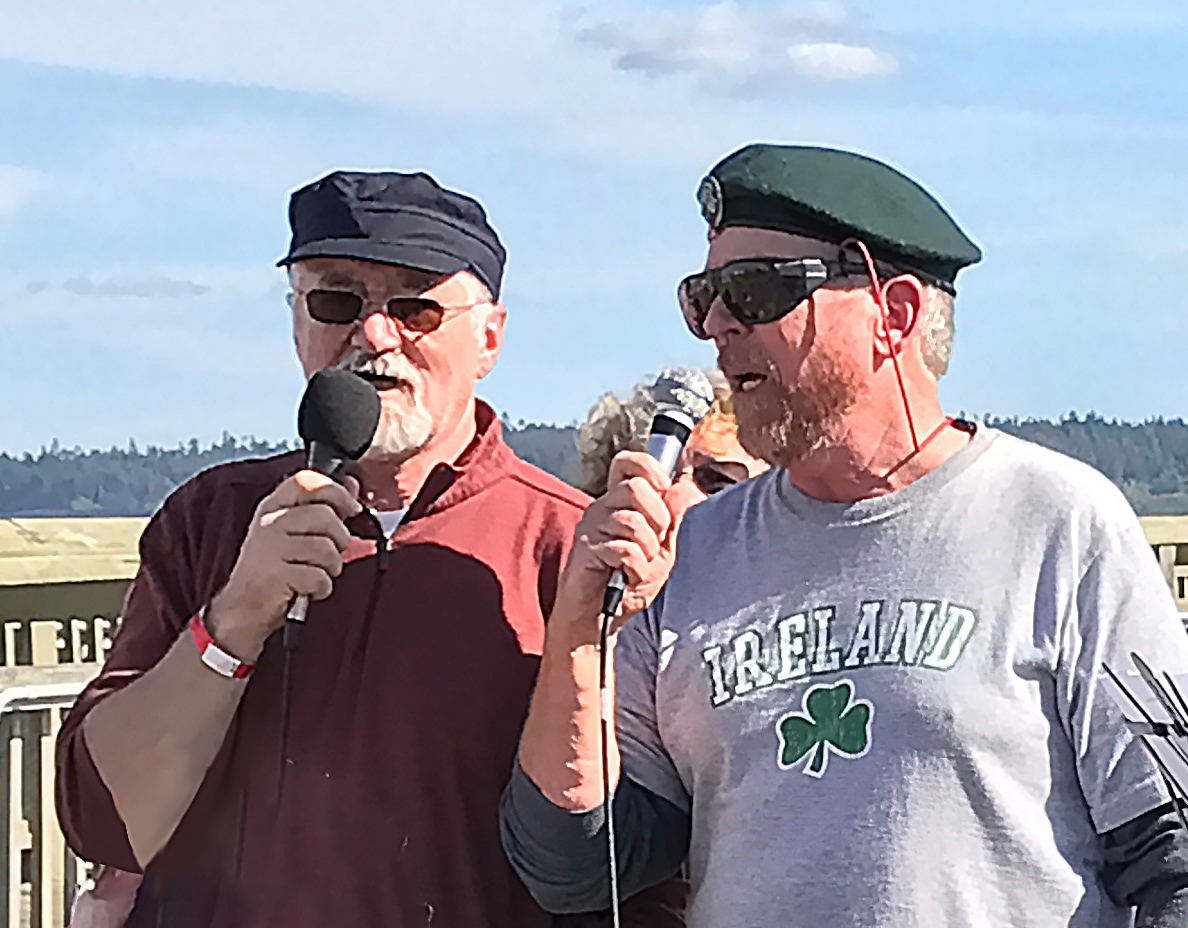
Thursday, Feb 25 from 7 to 8pm on KPTZ! A special night of music with Gilbert & McHagar, in collaboration with the Candlelight Concert Online series at Trinity United Methodist Church. KPTZ presents this evening of lively sea shanties, amusing stories and beautiful ballads of the sea. Tune in for timeless maritime tunes that once echoed across our Victorian waterfront during the golden age of sail. Listen on KPTZ 91.9FM or stream the video directly from Trinity United Methodist Church. While there is no paywall to listen, the program is partially a fundraiser for NAMI, The National Alliance on Mental Illness, in Jefferson County.
Jefferson County Anti-Racist Fund

KPTZ now partners with Jefferson County Anti-Racist Fund (JCARF), a grassroots reparations and mutual aid project focused on the individual and collective wellness of Black people, Indigenous people, and all other People of Color (BIPOC) in our local community. Since 2019, JCARF has distributed thousands of dollars in direct payments, gift certificates, locally grown food, handmade herbal medicine, and other wellness items to our BIPOC community members. As we look toward the upcoming growing season, JCARF honors the black farmers and chefs who sustain our community. Right now they are focusing on assisting 2 local black-owned businesses: Nadine’s Soul Kitchen and Woodbridge Farm. Find JCARF on Instagram at jeffersoncountyantiracistfund.
Nature Now #503
Understanding The Tides – Part 2
Local News for 2/24
Benji Project Teaches Youth Mindfulness and Self-Compassion
(Airdate: February 22, 2021) KPTZ News Director Steve Evans talks with Heather McRae-Woolf, Program Manager and Lead Instructor for the Benji Project, the youth mental health organization founded six years ago after the suicide death of then fifteen-year-old Benji Kenworthy to help young people deal with the psychological threats presented by an increasingly challenging world through teaching techniques of mindfulness and building self-compassion. Learn more at https://www.thebenjiproject.org.
#171 Hans Fredrickson
(First airdate: February 23, 2021) HANS FREDERICKSON: REDUCING CARBON FOOTPRINTS. Our Town host Maryanne McNellis interviews Hans Fredrickson, owner of Frederickson Electric. After taking over the business from his father, Hans saw new opportunities for the company. Frederickson still does a healthy business with new construction, repairs, and remodels. But recent years have seen tremendous growth in installing solar arrays, new heat pumps, and charging stations for electric cars. Despite our gloomy winters, our long sunny summer days make solar power economically attractive to homeowners and developers. Heat pumps can also drastically cut power consumption. Stanford-educated Hans is an ardent environmentalist. He wants to help his customers reduce their carbon footprints to keep the Pacific Northwest as pristine as possible.
Local News for 2/23
Critical Conversations #5
(Airdate: February 22, 2021) In Chapter 5 of Critical Conversations, cohosts Robert Ambrose and Dahr Jamail speak with noted author and journalist William Rivers Pitt, editor and chief columnist at TruthOut.org. The discussion centers on the abrupt end of Donald Trump’s second impeachment trial and the future of the Republican Party. Does the January 6th insurrection presage a Trumpist party with a military wing?
Critical Conversations airs on 91.9FM KPTZ the second and fourth Mondays each month, from 5:30-6pm.
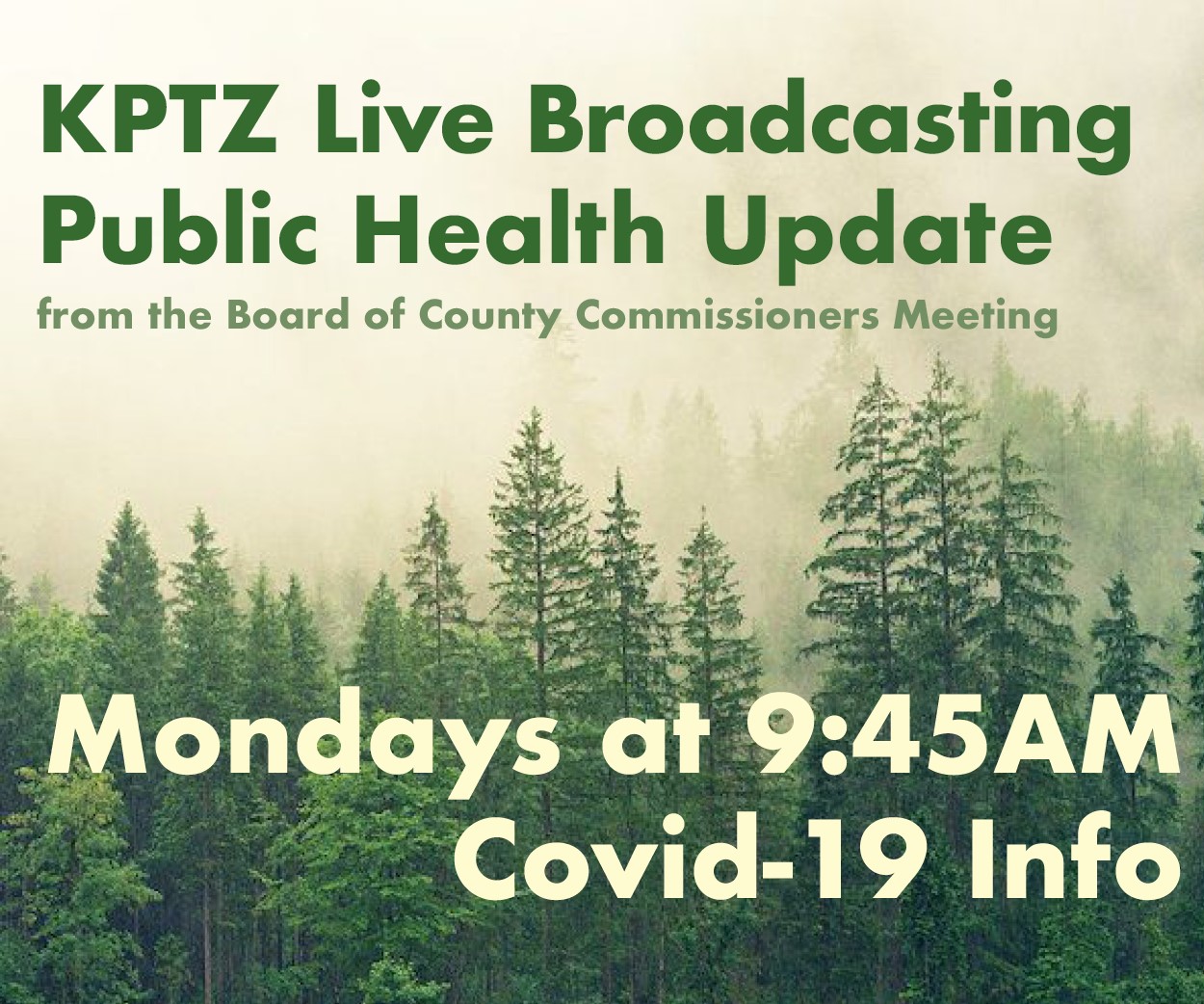
County Public Health Report ~ 2/22
The following is a summary of the presentation made by Dr. Locke, our local Health Officer, during the Public Health briefings at this week’s Board of County Commissioner’s meeting:
Click here to read the complete message
Submit your Public Health questions to Dr. Tom Locke by emailing [email protected]. Note: The weekly deadline for these to be submitted is on Fridays at noon, to be answered at the following Monday’s BOCC meeting.
County Public Health Report ~ 2/22
Today, February 22, 2021, our local Public Health Officer, Dr. Tom Locke shared his assessment of the pandemic in Jefferson County and answered questions submitted by KPTZ listeners.
Submit your Public Health questions to Dr. Tom Locke by emailing [email protected]. Note: The weekly deadline for these to be submitted is on Fridays at noon, to be answered at the following Monday’s BOCC meeting.
- Nationally, new COVID-19 cases are continuing to decline, noting a 44% drop from two weeks ago, averaging 66,000 cases a day. The actual case numbers, unfortunately, are far greater than those actually detected through COVID-19 testing. Hospitalizations and deaths continue to decline as well, although the nation saw deaths attributed to COVID-19 reach over a half million this past weekend.
- As of February 12, 2021, Jefferson County has reported 330 cases, only 2 cases last week, and a case rate down to 65.83 cases per 100,000 population and a 1.76% case positivity. The New York Times continues to place Jefferson County among the areas nationwide with the lowest case rates and percent positivity numbers.
- Neighboring county metrics continue to decline among those areas placed in our regional RoadMap to Reopening plan. Clallam County reports 54 cases per 100,000, Kitsap County reported 86 cases per 100,000, while Mason County recorded 65 cases per 100,000 population.
- Although case rates per 100,000 population are substantially decreasing, the appearance and rise of viral variants of SARS-CoV-2 pose a continued risk in terms of their increased ability to be easily transmitted, as well as cause more severe disease and death. The United Kingdom variant has been found in Washington state with the confirmation of 19 cases and is expected to become the dominant strain in the US, within the next few months. While the UK variant is sensitive to the two vaccines being given, the South African and Brazilian variants show some vaccine resistance.
- The appearance of these variants highlights the need to continue CDC recommendations, and most importantly, vigilance in refraining from mixing non-member households at this point in time. At the same time, all individuals wearing high quality masks and doubling them keeps the virus variants from getting a stronger foothold in communities. Double masks, surgical on the inside with cloth on the outside, improves protection for the source case, reducing the spread of infection.
- Dr. Locke cautioned that as much as 60% of the NK95 respirators available here do not meet FDA standards. Residents can find a list of acceptable KN95 respirators on the FDA and CDC websites.
- Nationwide, first vaccine doses have been administered to 12.2% of the population, with 4.5% having received both doses. Locally, Clallam and Jefferson County stand at 2,958 vaccine doses administered per 10,000 population. There will be a steady ramping up of supplies available week by week.
- A third manufacturer, Johnson & Johnson is expected to present their data from clinical trials this week to the FDA, and if approved, may have a supply available near the end of March, with 1,000,000 doses in the first delivery. By May, another two manufactures may be approved and producing vaccines.
Questions from KPTZ listeners:
- Current guidelines for gathering with non-household members, who both have completed their vaccinations, do not exist at this point in time, but current studies may offer some guidance when completed. Vaccine trials did not answer the question, once vaccinated, if subsequently infected with the coronavirus, could you pass it on to others. The trials addressed the severity of disease and death.
- Jefferson Healthcare does not encourage residents to sign up more than once with the registration notification process. Currently, there are approximately 7,000 residents over the age of 70 years waiting to be notified for a vaccination slot and the limited supplies of vaccine available. Registrants are being called or emailed in descending order by age.
- For nearly a month, Jefferson County did not receive any vaccine for first doses. This week 1,100 doses arrived for first doses, and our county is slated to receive the same amount next week. Areas residents 71 and older are now being notified by JHC to sign up for an appointment, so it is important to go online and register to be notified. Vaccinations are also available at area pharmacies, which receive between 100-200 doses a week and they all have registration for appointments at their websites.
- A solution is in the works for vaccine registration for those without email or internet access. The Department of Emergency Management operates a phone line at 360-344-9791 to register residents M-F, 9am to 4pm for those without internet access or an email to register with JHC. They are testing the solutions this week.
- Healthcare providers are listed in priority as 1A and qualify currently for vaccination now through the JHC registration process or pharmacies. They must be actively seeing patients and have a current license.
- Most people will have a sore arm as a result of vaccinations, with both first and second dose. Some people will have side effects from the second dose, such as fatigue and/or headaches, chills, fever, itching, and a rash at the injection site. These reactions are more typical in vaccine recipients under 55 years of age. You are fortunate if you don’t have side effects, but this does not suggest your immune system is not reacting as it should.
- The most serious reactions to the vaccine manifests within minutes of receiving the shot. Reactions include the feeling that the throat is closing or a drop in blood pressure, signaling a systemic allergic reaction. All vaccination sites are prepared for this rare type of reaction and can treat persons on the spot, if necessary. Those individuals with this type of reaction should not get a second dose. This is the reason for all those vaccinated to be observed and monitored for 15 minutes after the injection or 30 minutes if you have this type of reaction with other vaccines.
- It is advised for you to stick to your own county of residence for the vaccine, although every vaccination, anywhere, increases our safety. Currently, the available supplies are allocated by population percentages, with a new plan being finalized by the Governor that accounts for the number of persons at highest risk by age or other factors. Available supplies are the limiting factors, nothing else.
- While age has been the primary factor for selecting those persons for the limited availability of vaccine doses, persons over 65 years of age with underlying health conditions are being considered for vaccinations. The medical conditions are listed on the CDC website and include those undergoing chemotherapy, severe lung and heart disease, and diabetes, to name a few. This hierarchy is subject to change and is controlled by the Governors and guidance from the CDC.
- With the expected revised plan for vaccine allocation from the state soon, vaccine tiers will be opened in the future for mass vaccinations sites, as the predictability of long-range supply supplies will be more stable, forecast for three weeks in advance. Locally, we may be able to do this in March, as the vaccine supplies will outpace our capacity at the drive thru sites.