Listen
Live!

KPTZ.ORG • 91.9 FM PORT TOWNSEND, WA

Radio Connects Us All

A Pair of Plant Sales

(Airdate: May 2, 2022) This week’s edition of Attention Please! begins with a pair of spring plant sales, one by the Jefferson County Master Gardeners Foundation and another by Swan School with their annual Plant-a-Palooza. The second half of the show is an update of the programs which fulfill the purposes of the organization Olympic Neighbors.  Produced and hosted by Phil Andrus.
County Public Health Report – 5/02/22

The following is a summary of the presentation during the Public Health briefings at this week’s Board of County Commissioners meeting made by Jefferson and Clallam County Public Health Officer Dr. Allison Berry. Also Willie Bence, Director of Emergency Management, gave a report. The summary below was provided by and used with the permission of Jefferson County Government.

During County Health Officer Dr. Allison Berry’s weekly update, she noted that cases are rising on the west coast and throughout the U.S. Additionally, she feels there is a “dramatic undercount” because the vast majority of the country doesn’t count home antigen tests in their reported totals. Locally, home tests account for 70% of our positive cases. Washington state believes that they’re capturing about 16% of the positive cases in their counts right now. Dr. Berry noted that hospitalizations are beginning to rise which she noted is a “concerning trend.”

Because both Jefferson and Clallam counties are in the high risk transmission zone (above 200 cases per 100,000), Dr. Berry strongly recommends masking in indoor settings. “I think that transition back is going to take a little bit of time, she noted. “Many, many people in our communities got the message that COVID-19 was over when a lot of the restrictions went away so I think it’s going to take a little time to get everybody on board with masking in indoor settings again. I do think it’s a really good idea to do so. We’re seeing quite a bit of COVID-19 transmission. “If you’re in an indoor space with people you don’t know and you don’t know their vaccination status, that’s a space where it’s a really good idea to wear a mask. But, if you are in a private setting, I think a small dinner party is reasonable. If you are going to have a party with 10 or more people regardless of their vaccination status, I would recommend wear a mask in a setting like that. ”Dr. Berry suggested that location is important, too. For example, when visiting a care facility or a high-risk family member, wear a high-quality mask. Consider testing before you go and, if you are symptomatic, postpone your visit.

Dr. Berry noted that COVID-19 at-home testing is an important measure to determine if you are infected. Here’s the protocol from Dr. Berry: If you just have a mild symptom and it goes away and you test and it’s negative, that’s good enough. If you’re testing just because you’ve traveled and you don’t have any symptoms, a single test should be enough for you. But if you are sick, especially if you’re vaccinated, we know that your symptoms tend to start very early and sometimes even before your viral load has caught up enough to get to turn positive on a test. So, especially for our fully-vaccinated folks – but really for anyone – if you get sick and you take a test on that first day that you have symptoms and it’s negative, but those symptoms persist, take another test the next day. We’ve seen people turn positive 24 to 48 hours later, especially if you’re vaccinated, because your viral loads are low. That’s good. Your low viral load makes you less likely to transmit to other people and less likely to get severe symptoms, but you could still turn positive later. If you’re sick, take more than one test. There are an ample supply of antigen tests right now. If you’re still sick a couple days later, definitely still stay home whenever you’re symptomatic. And take a test again the next day. Test kits are available at Jefferson County Public Health, the libraries, and the fire departments in South County. They are also available free of charge from the State: https://sayyescovidtest.org. Order now to have a supply when needed.

As for Booster shots, Dr. Berry noted that the first booster is the most important one. “It would be reasonable if you are 75 and up and you have underlying conditions, consider getting that fourth booster just as a safety precaution,” she said.

If you are 65 and older, test positive for COVID-19, and are at a high risk for severe disease, there is an 5-day course of oral medication available. In Jefferson County, contact the Jefferson Healthcare COVID Nurse Consult Hotline for information on how to access the prescription: 360-344-3094.

Submit your Public Health questions to Dr. Allison Berry and to Willie Bence by emailing [email protected]. Note: The weekly deadline for these to be submitted is on Fridays at noon, to be answered at the following Monday’s BOCC meeting.

Brewocracy Now with John Mauro ~ 4/28

Today on Brewocracy Now host Taylor Clark and City Manager John Mauro were joined by Beaulah Kingsolver, Executive Director of Dove House Advocacy Services. They discussed the variety of services that Dove House provides, such as emergency and transitional housing, and the Recovery Cafe.

NW Straits Commission

(Airdate: April 27, 2022) This week on Coastal Café, host Aaron Barnett speaks with Dr. Lucas Hart, the Executive of the Northwest Straits Commission. Dr. Hart gives a detailed overview of the NW Straits Commission’s history, mission and current projects such Puget Sound bull kelp recovery, Olympia oyster restoration and derelict fishing gear removal. 

Nature Now #564
Seaweeds, part 1

(Airdate: April 27, 2022) Nature Now takes to the field again, as host Debaran Kelso heads out along the shore with guide Nam Siu of the WA Dept of Fish & Wildlife to talk about our native seaweeds.  This is part one of a two-part program.

David Michael Candlelight Concert

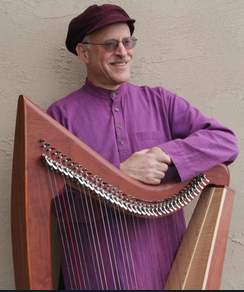
KPTZ partners with Trinity United Methodist Church’s Candlelight Concert series to present Celtic Harp player David Michael, live on the radio! David will be performing on Thursday, April 28 from 7-8pm for one set with no intermission. He will be joined for most of the concert by Gwen Franz on cello. The program will include selections from his newly released Skyburst album, copies of which be available at the concert. This concert is also being presented as an in-person event at Trinity United Methodist Church.

Digging Deep with C-DUB

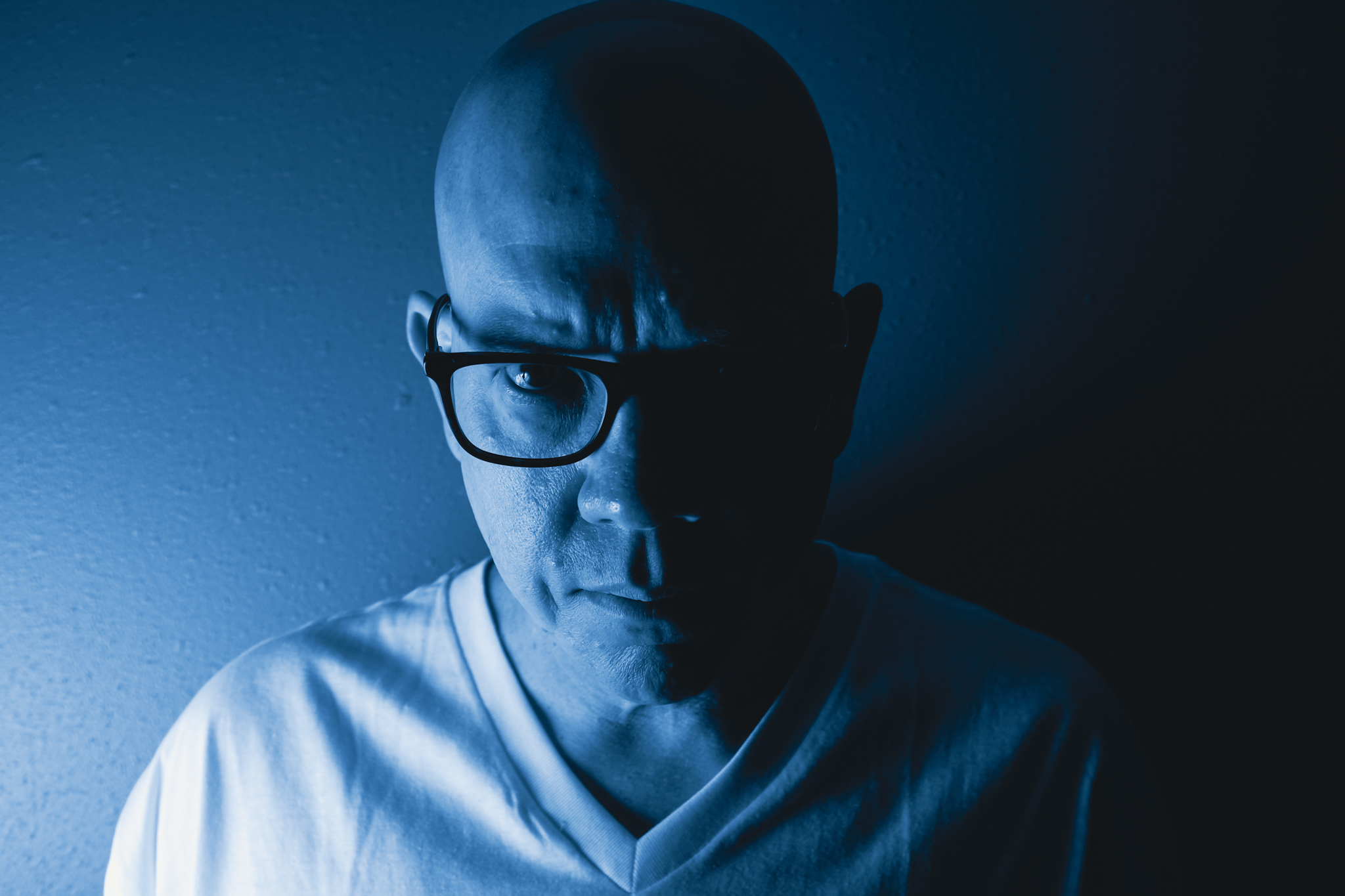
KPTZ Program Director Ruby Fitch recently caught up with Christian Wiseman aka C-Dub, the DJ/creator of the KPTZ’s Saturday night electronic music show The Blue Room. Christian sends in the show from his home studio in Houston and is a DJ & tradition bearer in the rave and Electronic Dance Music scenes.  Find out more, (much more!) below.

RF: How did you end up at KPTZ?

CW: I was catching up with my sister, Karen, who had been volunteering at KPTZ for a little while. I thought it would be fun to put together a demo and maybe have a show every once in a while. I reached out to you, and ended up sending in an hour-long mix. I kind of figured this was a long shot, since the kind of music I am into is a huge departure from what is typically on KPTZ, and frankly on terrestrial radio in general. As it turned out, you dug my stuff and offered me a weekly slot on Saturday nights. It’s mind blowing to have a radio show dedicated to the music that I have loved on a radio station that broadcasts almost 2,500 miles from my studio.

RF: The Blue Room has been a wonderful addition to KPTZ’s Saturday night programming. Can you talk a little bit about your process of curating and creating the show?

CW: I really appreciate the kind words! I have been deep into electronic music since I was a little kid, starting with synth / new wave stuff in the 80s, and then hip-hop, and then house / techno / jungle / IDM, etc. in 1990. I really have spent a good portion of my energy seeking out stuff that’s emotive and unusual. For a really long time, there weren’t really a lot of people out there that were listening to this kind of music. Particularly in the United States, this was underground music that you really had to go out and dig for. While I love electronic music across the spectrum, I do have a special place in my heart for ambient, downtempo, and dub-flavored electronica. From time to time, I will do a show that reaches outside, but the roots of the Blue Room are broadly in that zone. What’s interesting to me is that this music provides a lot of space to work with, and allows for the combining of infinite varieties of textures and rhythmic elements. It allows me to piece together interesting sounds that might be unexpected. I try to play music that vibes well for going into midnight on a Saturday in the Pacific Northwest.

RF: I appreciate the breadth of material that you bring  to each episode. There are always surprises on The Blue Room! Can I ask about your music collection? You mentioned “digging” in the past….what did that yield? Feel free to brag!

CW: Back in the beginning, this literally meant driving to Melrose in LA every Saturday first thing in the morning and digging through stacks of vinyl records at the many underground record shops on the block, like Beat Non Stop, DMC, and later on, Wax Records. These shops had a bunch of Technics 1200s set up and you could pull whatever you want, listen to it, and then buy whatever you could afford at the time. You also had CDs from places like Aron’s in Hollywood. They didn’t stock a bunch of anything, but they had one of everything, so if you got there at the right time, you could score some great import stuff. I was mostly buying stuff on vinyl that I was going to use in DJ sets, and CDs for stuff I was going to listen to. Mixtapes were a great resource at the time as well.

As the internet has evolved, it has made the process of finding music much different, obviously. I was never into the whole Napster / Limewire thing, because it was just a big pain in the ass. What has happened with streaming services – Soundcloud and Bandcamp, in particular – has really sped up things up to the extent that if you actually find something, getting it is a piece of cake. The problem, first-world as it may be, is that music distribution has become so democratized that we have an embarrassment of riches. There is just so much music out there. So even though you would think that labels are less relevant now, that’s not the case. If a label that has put out good stuff in the past is putting out new music, I am going to check that out. Some of the music blogs are also really helpful in finding great music. There is a crowdsourced page called TWGEEMA that is a phenomenal resource for ambient and IDM stuff.

So yeah, at the end of the day you end up with endless stacks of vinyl records and binders full of thousands of CDs. I ripped all of the CDs a long time ago, and I just spent a few months painstakingly cleaning and digitizing all of my vinyl. Even with the bounty that is the internet, I still have a lot of stuff in my collection that is not available digitally anywhere. Now that everything is in the computer, I have sold my turntables and am getting rid of the vinyl. I no longer have the sentimental connection to it, and it just takes up too much room at this point.

To make a long story short: being in a city that has zero electronic music scene / presence, having a large high-quality collection from over the years, as well as a solid internet connection, has been key to assembling The Blue Room.

RF:Thanks for the deep dive, Christian! It truly is an embarrassment of riches! I feel like the unrestricted access to new and old music, through streaming services and the internet is also creating an acceleration of innovation in electronic/club music genres. There’s some bold, super-informed and hyperactive creativity happening out there and it’s happening fast. Do you sense that too?

CW: Absolutely. The technological aspect of music distribution and availability has also been a major factor in democratizing music production and DJ culture. The thing is, a lot of people who get into electronic music and hip-hop – which, as far as I am concerned is the same thing from a production perspective – decide that they want to try their hand at either making or mixing this stuff. Since the barrier to entry does not have to involve learning a traditional musical instrument, and the number of tools available has exploded over the years, everybody wants to do what they are hearing their musical heroes do. Of course, you can spend a ridiculous amount of money building a studio, but you can also use software that is cheap or free to do the same thing, so long as you have a computer that has decent processing capabilities and/or a couple of hundred dollars. Yes, it is easier to make a drum beat from a loop than it is to learn how to play the drums, and yes, auto-sync makes mixing a lot easier than learning how to beat match using a pair of turntables. But the idea that you can make a hot track or mixtape by pressing a button is simply a myth.

That being said, the amount of great creative work coming out of electronic music artists right now is staggering. In electronic music, you do have your highly formulaic big-room festival EDM stuff that rolls eyes, but you also have legends across genres still putting out music after decades, as well as new artists putting out heat using their laptops or little $200 used sample loopers or whatever. It’s very exciting!

RF: Very exciting! As f**ked up as the world feels right now, we are living in a golden age for musical artistry and creativity, thanks to digital resources. There’s this remarkable and unprecedented ease of ability to share, collaborate, and learn from one another – even at great distances. With the caveats of…if bombs aren’t falling on your head and you have the means to plug in.

Before we close up, will you talk about your own work as a producer/composer and your interest in modular synthesis?

CW: I have been making electronic music as a hobbyist for almost as long as I have been listening to the stuff. I think I have more of an affinity for working with the gear than I do trying to blow up as a musician or whatever. So I always have a studio, and I work on music more or less depending on whether or not I am inspired in that way, which seems to come in phases. In the beginning, it was all hardware, and then it went more and more into the computer, and then eventually back more into hardware as manufacturers started to get back into making analog stuff again. Really, most of the stuff I make has some sort of acid influence to it.

The story of this sound has been told a million times, but in short, the acid sound comes from the Roland TB-303, which was a commercial failure because it was not great at doing what it was designed for – that is, trying to sound like a traditional bass player. It was marketed at the time alongside the TR-606 drum machine, which wasn’t Roland’s best drum machine either. The idea was that the bedroom musician could get the 606 and the 303 and not have to get a drummer and bass player. Nice thought, but the execution was not ideal due to the fact that programming the internal sequencer with a predictable pattern of notes and steps, even if you had the manual, was extremely difficult. It also sounded nothing like a bass guitar. In the late 80s, musicians started snapping these things up from pawn shops because they were dirt cheap, and they figured that if you altered the filter settings while it was playing, it gave this amazing futuristic liquid sound. So then you have the birth of acid house, acid in techno, and eventually, acid everywhere.

There’s nothing particularly unique about the 303 as far as the actual synth voice goes – it’s just a monophonic synth with a subtractive ladder filter. So you can really use any number of synth voices to get a similar sound, if that’s what you are going for. I have had a Devilfish TB-303, which is a heavily modified stock 303, and have used many other synths over the years. Over the last few years, I kind of went down the Eurorack rabbit hole, which is essentially a bunch of purpose-built modules (oscillators, filters, gates, sequencers, etc.) that you can connect to each other in whatever way you want. For making unpredictable sounds and sequences, it’s a blast. There is obviously some predictability when patching one thing to another, but a system like this is more fun for me in discovering happy accidents than doing actual songwriting, per se. For every Steve Roach that you have who can orchestrate these machines into complete compositions, there are thousands of people like me that just enjoy messing with the gear and seeing what happens. My modular setup is really great at doing the kind of thing that I like to listen to, so in that regard, it’s successful.

RF: What a juicy response, especially for anyone who is interesed in gear. Thanks for the interview, Christian!
You can catch The Blue Room on KPTZ on Saturdays from 11pm until  midnight.